
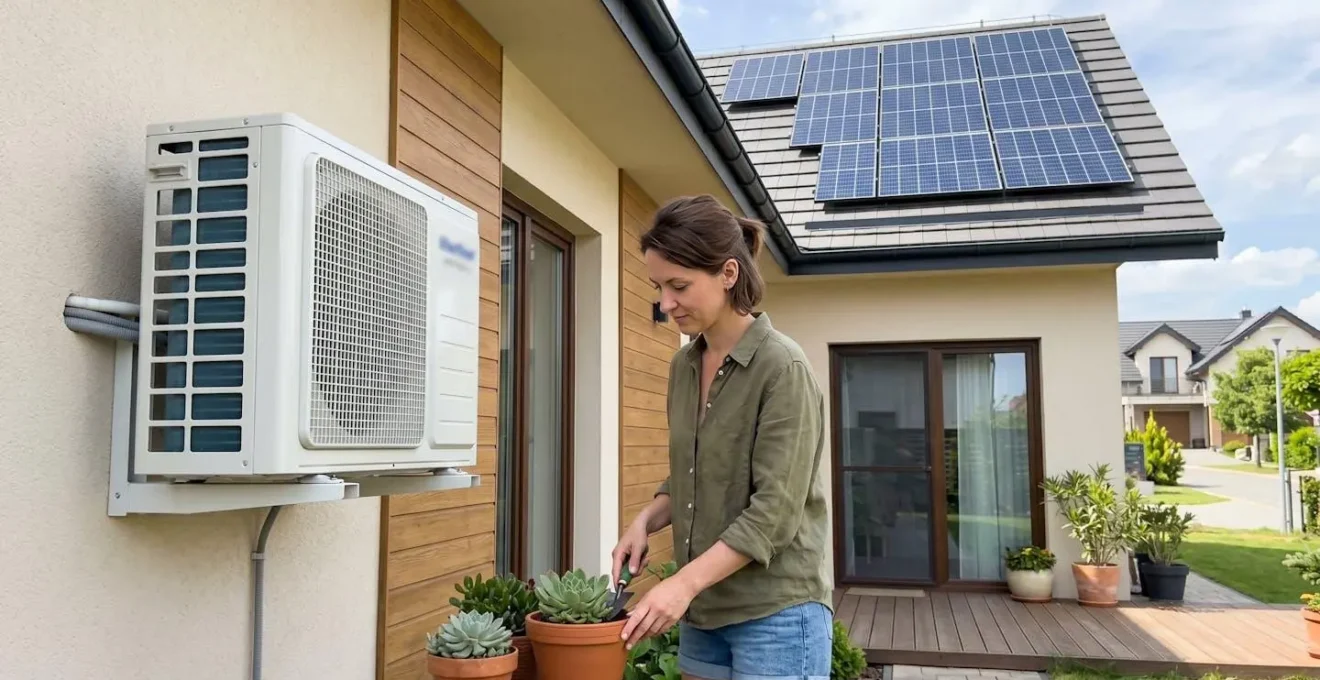
As global temperatures climb and energy costs surge, the demand for eco-friendly air conditioning solutions has shifted from aspiration to necessity. Balancing indoor comfort with energy efficiency is no longer a trade-off—modern technologies now deliver both. From thermodynamic innovations and natural refrigerants to smart building integration, the cooling industry is undergoing a transformation that promises to keep spaces comfortable whilst cutting energy bills and carbon emissions.
In this article
- Choosing the right eco-friendly AC system for your needs
- How thermodynamics drive energy efficiency in modern AC?
- Inverter technology: the backbone of efficient cooling
- Natural refrigerants and low-GWP alternatives
- Passive cooling strategies to reduce AC load
- Smart building integration and IoT-enabled management
- Emerging technologies shaping the future of cooling
- Frequently asked questions
Choosing the right eco-friendly AC system for your needs
Selecting an air conditioning system that genuinely reduces energy consumption and environmental impact begins with understanding the fundamental differences between residential and commercial cooling requirements. A typical household prioritises compact units with straightforward installation, whilst commercial spaces demand multi-zone control and scalable capacity. The choice between a split system, window unit, or centralised solution depends on building layout, climate zone, and long-term running costs rather than upfront price alone.
Residential properties typically operate with predictable occupancy patterns—cooling demand peaks in evenings and weekends, allowing for simpler scheduling. A 120-square-metre home might suffice with a single high-efficiency split system or a compact multi-split configuration covering two to three zones. In contrast, commercial buildings face simultaneous heating and cooling needs across different orientations; south-facing offices overheat whilst north-facing meeting rooms require warmth. This complexity justifies advanced solutions like Variable Refrigerant Flow systems, which can recover waste heat from one zone to supply another.
Manufacturers like Westpoint offer comprehensive residential air conditioning solutions covering split systems, window units, and portable options, with energy ratings ranging from A++ to A+++. When evaluating these products, the energy label remains your first filter: an A+++ unit consumes approximately 60% less electricity than a C-rated equivalent over its lifespan, translating to hundreds of pounds in savings.
The Seasonal Energy Efficiency Ratio (SEER) measures an air conditioner’s efficiency over an entire cooling season, accounting for variable outdoor temperatures and part-load operation. The Energy Efficiency Ratio (EER), by contrast, reflects instantaneous performance at peak load—useful for comparing maximum cooling capacity per watt consumed. Both metrics matter: high SEER ensures year-round savings, whilst strong EER confirms the unit won’t falter during heatwaves.
European energy labels (A+++ to D) simplify these technical ratings into a visual scale. The label also discloses annual electricity consumption (kWh/year) under standardised conditions, enabling you to estimate running costs by multiplying this figure by your local electricity tariff. For instance, a unit rated at 350 kWh/year in a region with a 0.25 €/kWh tariff costs roughly 87.50 € annually to operate.
Building age, insulation quality, and glazing type profoundly influence which cooling technology delivers optimal results. A modern passive house with triple glazing and airtight construction requires far less cooling capacity than a 1970s structure with single-pane windows—oversizing the unit wastes energy through inefficient short-cycling. Equally, a building with poor shading or extensive west-facing glass benefits disproportionately from integrating passive measures (external blinds, reflective coatings) before investing in a larger mechanical system. Climate zone also dictates refrigerant choice and system design. In humid subtropical regions, dehumidification becomes as critical as temperature reduction, favouring systems with dedicated moisture control or desiccant-enhanced evaporative cooling. In arid climates, simpler evaporative coolers or low-GWP refrigerant systems suffice, often at a fraction of the capital and operating cost.
Find your optimal eco-friendly cooling solution
- If you own a single-family home (under 150m²) in a temperate climate:
A high-SEER split or multi-split inverter system (A+++ rated) will deliver efficient whole-home cooling with manageable upfront cost. Prioritise models using R-290 or R-32 refrigerants to future-proof against regulatory phase-downs.
- If you manage a medium-sized commercial building (500–2000m²) with mixed-use zones:
A Variable Refrigerant Flow (VRF) system offers simultaneous heating and cooling across multiple zones, with heat recovery capabilities that can reduce energy consumption by 30–40% compared to separate boiler and chiller systems.
- If your building is in a humid climate with high latent cooling loads:
Consider systems with enhanced dehumidification (variable-speed fans, hot-gas reheat) or explore desiccant-wheel systems that separate moisture removal from sensible cooling, improving overall efficiency in sticky conditions.
- If upfront budget is constrained but long-term savings are a priority:
Invest in the highest-SEER inverter model within reach and finance any shortfall through energy savings. A premium inverter typically pays back its cost premium within 3–5 years through reduced electricity bills.
How thermodynamics drive energy efficiency in modern AC?
The principles of thermodynamics underpin every air conditioning system: heat naturally flows from warmer to cooler areas, and mechanical work is required to reverse this process. Modern units have refined this dance through enhanced heat exchangers and precise refrigerant control, achieving cooling effects with substantially less power input than predecessors from even a decade ago.
One critical advancement lies in heat exchanger design. By increasing surface area through micro-channel coils and employing materials with superior thermal conductivity (aluminium alloys, copper-tube-aluminium-fin configurations), manufacturers accelerate heat transfer between refrigerant and air. This means the compressor expends less energy to achieve the same temperature drop, directly translating to lower electricity consumption and reduced environmental impact. A well-optimised heat exchanger can improve system efficiency by 15–20% compared to legacy designs.
Equally transformative is the shift to electronic expansion valves (EEVs) from mechanical thermostatic valves. EEVs modulate refrigerant flow with millisecond precision, maintaining optimal superheat and sub-cooling across varying load conditions. This granular control was unattainable with older mechanical valves, which operate on fixed spring tension and react sluggishly to load changes. The result: the refrigerant circulates at the ideal pressure and temperature for efficient heat absorption in the evaporator and rejection in the condenser, minimising wasted energy throughout the thermodynamic cycle.
A 2025 IEA analysis confirms that energy demand for space cooling has seen the fastest growth of any end-use in buildings since 2000, expanding over 4% per year. This acceleration underscores the urgency of deploying high-efficiency technologies: even modest efficiency gains, when multiplied across billions of installed units worldwide, yield colossal energy savings and emissions reductions.
Inverter technology: the backbone of efficient cooling
The most significant leap forward in air conditioning efficiency over the past two decades stems from the widespread adoption of inverter technology. This innovation fundamentally alters compressor operation, replacing crude on-off cycling with smooth, variable-speed modulation that matches cooling output to real-time demand. The energy savings are substantial—typically 30–50% compared to fixed-speed units—and comfort improves through stable temperatures and quieter operation.
Variable Refrigerant Flow systems represent the commercial pinnacle of inverter technology. VRF employs a single outdoor unit connected to multiple indoor units (often 10 to 50 or more), with an inverter-driven compressor modulating refrigerant volume to precisely meet the cooling or heating demand of each zone. Refrigerant piping branches to individual fan coils, each equipped with an electronic expansion valve that fine-tunes refrigerant flow based on local temperature setpoints. The hallmark of VRF is its ability to provide simultaneous heating and cooling to different building areas. Heat recovery VRF systems capture surplus heat from overcooled zones (such as server rooms or sun-drenched south-facing offices) and redistribute it to areas requiring warmth (north-facing meeting rooms, shaded corridors). This internal heat recycling slashes overall energy consumption, with some installations reporting 40% savings versus conventional split systems paired with separate electric heating.
At the heart of every inverter air conditioner lies a DC (direct current) inverter compressor. Unlike traditional AC motors that run at a single fixed speed (typically 50 or 60 Hz grid frequency), DC inverter compressors vary their rotational speed from as low as 20% to as high as 120% of rated capacity. This flexibility is achieved through power electronics that convert incoming AC mains electricity to DC, then back to variable-frequency AC, allowing precise motor speed control.

When a room approaches its target temperature, a fixed-speed unit shuts down completely, then restarts when the thermostat detects a rise. This on-off cycling is inherently inefficient: each startup draws a surge current, and the stop-start pattern creates temperature oscillations of ±2°C or more. An inverter compressor, conversely, ramps down to a low-speed cruise, maintaining the setpoint with minimal energy input. Continuous operation also eliminates thermal shock on components, extending equipment lifespan and reducing maintenance frequency.
A 2025 IEA analysis confirms that consumers can purchase air conditioners with efficiency levels ranging from 3 watts per watt (W/W) to more than 6 W/W for similar upfront costs—effectively twice the efficiency at the same price point. The IEA’s Net Zero guide sets ambitious targets of SEER 5.0 to 6.5 for space cooling equipment between 2024 and 2030 under high-efficiency scenarios, benchmarks that premium inverter models already meet or exceed.
Translating these metrics into real-world savings: a household running a SEER 20 inverter air conditioner for 1,000 hours per cooling season (at an average load of 3.5 kW cooling capacity) will consume approximately 350 kWh. The same cooling load served by a SEER 13 traditional unit consumes roughly 540 kWh—a difference of 190 kWh, or around 47 pounds sterling annually at typical UK electricity rates. Multiply this across a unit’s 12–15-year lifespan, and the cumulative savings dwarf the modest purchase premium of inverter models.
| Performance metric | Traditional fixed-speed AC | Inverter AC |
|---|---|---|
| Typical SEER rating | 13–16 | 20+ |
| Energy consumption (annual kWh for 3.5 kW unit, 1000 hrs) | ~540 kWh | ~350 kWh |
| Temperature stability | ±2°C fluctuation | ±0.5°C stable |
| Noise level (indoor unit) | 35–45 dBA | 22–30 dBA |
| Compressor lifespan | 8–10 years | 12–15 years |
| Upfront cost (indicative, 3.5 kW unit) | £600–900 | £900–1400 |
30–50%
Energy savings achievable with inverter technology over an entire cooling season compared to traditional fixed-speed air conditioners
Modern inverter systems extend their efficiency gains through integration with smart sensors and adaptive algorithms. Infrared occupancy sensors detect human presence in real time, signalling the air conditioner to ramp down when a room empties and restore comfort moments before occupants return. Temperature and humidity sensors at multiple points enable predictive control: if outdoor conditions suggest an approaching heatwave, the system may pre-cool thermal mass during cheaper off-peak hours, then coast through expensive peak periods at reduced power. Machine learning algorithms refine these responses over weeks and months, learning occupancy patterns, preferred comfort settings, and seasonal weather trends. A well-trained system anticipates that a south-facing office will overheat every afternoon and preemptively increases airflow before temperatures spike, avoiding the inefficient full-power scramble that would otherwise occur. This proactive approach smooths energy demand, reduces peak load contributions, and lowers electricity costs where time-of-use tariffs apply.
Natural refrigerants and low-GWP alternatives
The environmental impact of air conditioning extends beyond electricity consumption. The refrigerants circulating within these systems—if leaked or improperly disposed of—can exert outsized influence on global warming. Legacy hydrofluorocarbons (HFCs) such as R-410A carry Global Warming Potential (GWP) values in the thousands, meaning a single kilogram released into the atmosphere has the same climate impact as several tonnes of CO2 over a century. Regulatory pressure, spearheaded by the European Union’s F-Gas Regulation and the United Nations’ Kigali Amendment, is driving a rapid transition toward natural refrigerants and low-GWP synthetic alternatives.
Propane, designated R-290 in refrigeration applications, boasts a GWP of just 3—orders of magnitude lower than conventional HFCs. Beyond its minimal climate impact, R-290 delivers excellent thermodynamic performance, often outperforming R-410A or R-32 in equivalent system designs. Residential split systems using R-290 have demonstrated SEER gains of 5–10% in independent testing, translating directly to lower running costs. The primary challenge with propane is its flammability, classified as A3 under refrigerant safety standards. Modern engineering mitigates this risk through reduced refrigerant charge limits (typically under 150 grams per indoor unit), hermetically sealed components, and leak detection sensors that trigger automatic shutdown if concentrations approach flammable thresholds. Several European and Asian manufacturers now offer R-290 split systems that comply with international safety standards (ISO 5149, IEC 60335-2-40), providing homeowners with an eco-friendly option backed by rigorous safety protocols.
Carbon dioxide, or R-744, stands as the ultimate low-impact refrigerant with a GWP of 1. CO2 systems operate at significantly higher pressures than traditional refrigerants (often exceeding 100 bar in transcritical cycles), presenting engineering challenges but also enabling compact, high-efficiency designs. In cold climates, CO2 heat pumps excel, maintaining strong heating performance down to -25°C outdoor temperatures—conditions where conventional refrigerants falter. Commercial refrigeration has embraced R-744 more rapidly than residential air conditioning, with supermarkets and cold-storage facilities deploying transcritical CO2 cascade systems that combine superior efficiency with near-zero environmental risk. The technology is gradually migrating to smaller-scale applications, including rooftop packaged units for light commercial buildings, though higher equipment costs remain a barrier to mass adoption in the residential segment.
Hydrofluoroolefins (HFOs) represent a bridge technology—synthetic refrigerants engineered to deliver low GWP without the flammability concerns of hydrocarbons. R-1234yf and R-1234ze exhibit GWP values below 1 and 7 respectively, a dramatic improvement over R-410A (GWP 2,088) or even R-32 (GWP 675). HFOs degrade rapidly in the atmosphere (typical lifetime measured in days rather than years), minimising their cumulative climate impact. Many HFO formulations serve as near-drop-in replacements for existing HFC refrigerants, easing the transition for manufacturers and installers. Automotive air conditioning has widely adopted R-1234yf, and residential and commercial HVAC markets are following suit, particularly where natural refrigerants face regulatory or safety hurdles. The main drawback remains cost: HFOs currently command a price premium of 50–100% over legacy refrigerants, though economies of scale are expected to narrow this gap as production volumes increase.
Ammonia, or R-717, has cooled industrial processes for over a century. It offers a GWP of zero, exceptional energy efficiency, and wide availability at low cost. However, its toxicity and flammability have historically confined its use to large-scale industrial refrigeration (cold storage, food processing, ice rinks) where trained personnel and robust safety systems are standard. Recent innovations in low-charge ammonia systems—using secondary refrigerant loops or micro-channel heat exchangers that drastically reduce ammonia inventory—are expanding R-717’s applicability to medium-sized commercial installations. Some district cooling schemes and large commercial buildings now employ ammonia chillers with charge volumes under 50 kilograms, balanced by comprehensive leak monitoring and automated ventilation. Whilst unlikely to penetrate the residential market, ammonia remains a key option for large-scale sustainable cooling.
Regulatory timelines are accelerating this shift. As set out in the EU F-Gas Regulation (EU) 2024/573, from 2025 HFC producers will receive rights equivalent to 60% of their average annual production from 2011 to 2013, declining to 15% by 2036. This quota mechanism artificially constrains supply, driving up HFC prices and making low-GWP alternatives economically competitive. Additionally, from 2026 onwards, servicing air conditioning and heat pump equipment with virgin HFCs carrying a GWP above 2,500 will be prohibited, effectively mandating transitions to R-290, R-32, HFOs, or other low-GWP options.
| Refrigerant | GWP (100-year) | Safety class | Typical applications | Regulatory status (EU 2026) |
|---|---|---|---|---|
| R-290 (propane) | 3 | A3 (flammable) | Residential splits, portable units | Fully compliant |
| R-744 (CO2) | 1 | A1 (non-toxic, non-flammable) | Heat pumps, commercial refrigeration | Fully compliant |
| R-1234yf (HFO) | <1 | A2L (mildly flammable) | Automotive AC, residential units | Fully compliant |
| R-1234ze (HFO) | 7 | A2L (mildly flammable) | Chillers, large commercial systems | Fully compliant |
| R-717 (ammonia) | 0 | B2L (toxic, mildly flammable) | Industrial refrigeration, district cooling | Fully compliant |
| R-32 (HFC) | 675 | A2L (mildly flammable) | Residential, light commercial | Compliant but quota-limited |
| R-410A (HFC) | 2,088 | A1 (non-toxic, non-flammable) | Legacy residential & commercial | Banned for servicing (GWP >2500 rule applies to blends) from 2026 |
Passive cooling strategies to reduce AC load
Mechanical air conditioning, no matter how efficient, consumes electricity. Combining active systems with passive cooling techniques can slash overall energy demand by reducing the thermal load before the compressor even switches on. These strategies harness natural phenomena—nocturnal temperature drops, thermal inertia, evapotranspiration—to achieve comfort with minimal or zero energy input. In well-designed buildings, passive measures can eliminate mechanical cooling needs entirely during shoulder seasons and significantly dampen peak summer loads.
Night purge ventilation exploits the diurnal temperature swing common in many climates. During summer nights, outdoor air temperatures often fall 10–15°C below daytime peaks. By flushing the building with this cooler air—using automated window actuators, mechanical ventilation fans, or simply manually opened windows—the structure’s thermal mass (concrete slabs, masonry walls, internal partitions) absorbs and stores coolness. Come morning, the cooled mass acts as a thermal battery, passively absorbing heat gains throughout the day and delaying the point at which mechanical cooling becomes necessary. The effectiveness of night purge hinges on two factors: sufficient thermal mass and adequate ventilation rates. Lightweight timber-framed buildings with minimal masonry offer limited storage capacity, whereas heavy concrete structures excel. Ventilation rates of 5–10 air changes per hour during the purge period (typically 10 PM to 6 AM) are generally required to achieve meaningful pre-cooling. In climates with consistently high nighttime humidity, night purge may offer limited benefit, as latent heat removal becomes more critical than sensible cooling.
Solar chimneys leverage the stack effect—warm air’s natural buoyancy—to drive ventilation without fans. A vertical shaft, typically glazed on the sun-facing side, heats up during the day, creating a strong upward airflow. This draws cooler air from lower building levels (basements, shaded courtyards, earth-coupled air channels) through occupied spaces and expels hot air at the roof level. The temperature differential between inlet and outlet determines driving pressure: even a 5°C difference can generate sufficient airflow to achieve several air changes per hour in a well-designed system. Integration with smart controls maximises performance: automated dampers can close the chimney during peak heat to prevent overheating, then reopen during evening hours to purge accumulated heat. In milder weather, the solar chimney may eliminate mechanical cooling entirely; during heatwaves, it reduces the burden on air conditioning by pre-ventilating spaces and lowering indoor temperatures by several degrees.

Urban heat islands—concentrations of concrete, asphalt, and dark roofing—can elevate city centre temperatures by 5–7°C compared to surrounding rural areas, intensifying cooling demand. Green roofs and vertical gardens counteract this phenomenon through evapotranspiration and shading. Vegetation absorbs solar radiation for photosynthesis and transpiration rather than converting it to sensible heat, whilst the growing medium provides additional insulation.
EPA data on green roof thermal performance show that green roofs can reduce the cooling load by 70 percent and lower indoor air temperature by 27°F (approximately 15°C) in buildings compared to conventional roofs. Surface temperature reductions are even more dramatic: green roofs can be 56°F (around 31°C) cooler than conventional roofs on a hot summer day. These thermal benefits translate directly to energy savings, with annual cooling cost reductions of $0.15 to $0.57 per square yard on a yard-by-yard basis.
Beyond energy efficiency, green roofs deliver co-benefits that enhance their value proposition: stormwater retention (reducing urban flooding), improved air quality (vegetation filters particulates and absorbs CO2), extended roof membrane lifespan (shielded from UV degradation and thermal cycling), and biodiversity support in dense urban settings. For large commercial or institutional buildings, these ancillary benefits often justify the initial installation premium, which typically ranges from £50 to £120 per square metre depending on system type (extensive vs intensive).
Passive cooling checklist for your building
- Audit existing thermal mass (concrete, masonry, stone) and consider exposing ceilings or adding mass to lightweight structures
- Install automated window actuators or motorised vents to enable reliable night purge ventilation without manual intervention
- Evaluate solar chimney or stack ventilation feasibility for naturally-driven airflow during shoulder seasons
- Assess roof suitability for green roof retrofit (structural load capacity, waterproofing condition, access for maintenance)
- Install external shading (brise-soleil, operable louvres, vegetation) on east- and west-facing glazing to block low-angle sun
- Upgrade to high-performance glazing (low-e coatings, triple pane) to reduce conductive and radiant heat gains
Passive strategies deliver maximum value when implemented during initial design or major refurbishment, but many—external shading, reflective roof coatings, night ventilation protocols—can be retrofitted to existing buildings with modest investment. The key principle: every watt of cooling load eliminated through passive means is a watt that needn’t be mechanically conditioned, compounding energy savings year after year. For further guidance on reducing mechanical cooling demand without sacrificing comfort, explore practical ways to limit air conditioning through behavioural adjustments and smart scheduling.
Smart building integration and IoT-enabled AC management
The integration of air conditioning into broader smart building ecosystems unlocks a new dimension of efficiency. By connecting HVAC systems to the Internet of Things (IoT), building managers gain real-time visibility into energy consumption, occupancy patterns, and equipment health. Advanced analytics and machine learning algorithms process this data stream to optimise performance dynamically, predicting cooling needs before they materialise and adapting operation to minimise waste.
Machine learning algorithms ingest historical data—weather forecasts, occupancy schedules, solar irradiance patterns, indoor temperature trends—and construct predictive models of cooling demand. A well-trained algorithm learns, for instance, that every Monday morning the south-facing conference room overheats by 3°C within an hour of sunrise, and proactively pre-cools that zone at 7:30 AM to maintain comfort when occupants arrive at 8:00 AM. Similarly, the system anticipates heatwaves 24–48 hours in advance, pre-cooling thermal mass during cheaper off-peak electricity periods and coasting through peak-tariff hours at reduced power. This predictive approach contrasts sharply with traditional reactive control, where the system responds only after temperatures deviate from setpoints. Reactive control often overshoots (excessive cooling) or lags (discomfort spikes), wasting energy and compromising comfort. Predictive algorithms smooth these oscillations, reducing peak demand by 15–25% and improving occupant satisfaction scores. The algorithms continuously refine their models as they observe actual performance, adapting to evolving building usage patterns (new tenants, renovated spaces, seasonal schedule changes).
Infrared and ultrasonic occupancy sensors enable granular zone control. Instead of cooling an entire open-plan office uniformly, the system can identify which desks are occupied and adjust airflow accordingly. Unoccupied zones revert to a setback temperature (typically 2–3°C warmer), reducing energy consumption whilst maintaining rapid recovery capability when occupants return. Advanced systems even detect occupancy density—distinguishing between a single person at a desk and a packed meeting room—and modulate cooling intensity to match actual metabolic heat loads. Personalised comfort extends this concept further. Mobile apps or desktop widgets allow individual occupants to specify preferred temperatures within acceptable ranges (e.g.,